Case Studies
Case Study: University of Florida
In this collaborative study, we are studying the role of microbial communities, mainly bacteria and fungi in sustainable agricultural practices. The study also aims to establish how microbial communities can be used as indicators of success in sustainable agriculture settings and plant disease management. To achieve these objectives, bacterial and fungal communities in different types of crop rotations, fertilizer treatments and irrigation regimes were compared.
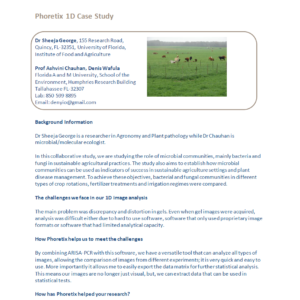
“By combining ARISA-PCR with this software, we have a versatile tool that can analyze all types of images, allowing the comparison of images from different experiments; it is very quick and easy to use. More importantly it allows me to easily export the data matrix for further statistical analysis.
This means our images are no longer just visual, but, we can extract data that can be used in statistical tests.”
“In our case using ARISA (on an Agilent Bioanalyzer platform) and TotalLab’s CLIQS 1D Pro software has enabled us to perform robust experiments. My advice for any interested user is simple; download the fully functional trial version, try it and you will be impressed. A search of the impressive list of scholarly articles that cite the software will definitely inform you of its ability.”
Case Study: Campden & Chorleywood Food Research Association (now Campden BRI)
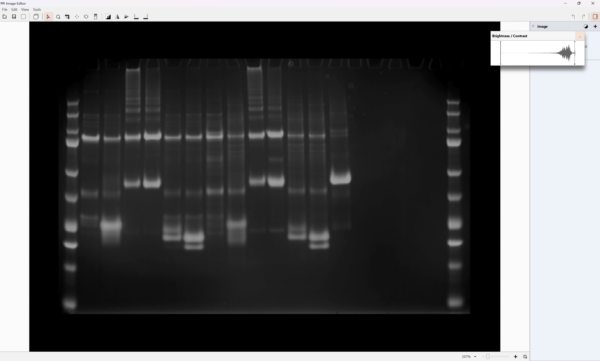
Rapid wheat varietal identification using the Agilent 2100 bioanalyzer and automated pattern-matching
The Campden & Chorleywood Food Research Association (CCFRA) in Chipping Campden, UK, ran this study for the flour milling industry: a fast, objective way to confirm the variety of wheat arriving at the mill. CCFRA merged with Brewing Research International in 2008 to form Campden BRI, which works with food and drink companies worldwide.
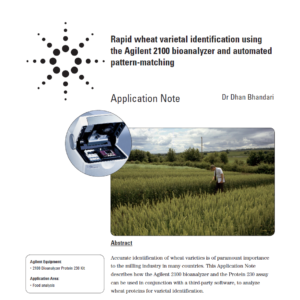
“Our study has demonstrated that using the Agilent 2100 bioanalyzer with the Phoretix [now CLIQS 1D Pro] system offers a standardized, objective method for rapid varietal discrimination. The ease of use and total analysis time of less than 50 minutes makes it most suitable for mill intake use. The optimized system will enable millers to make more confident decisions in accepting grain consignments, and could become widely adopted as an effective policing tool within the grain industry. A number of UK mills have purchased the combined systems for screening wheat deliveries at intake.”

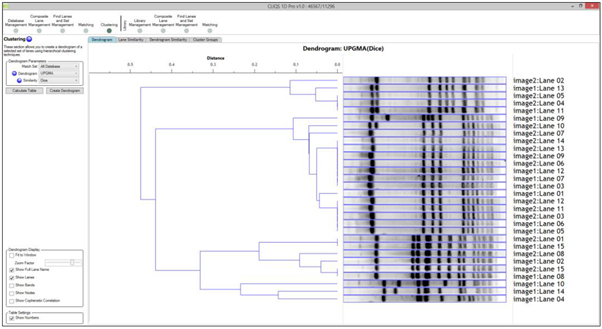
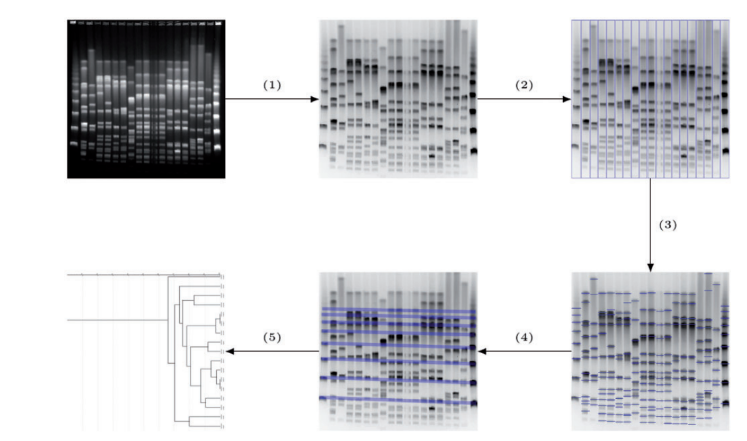
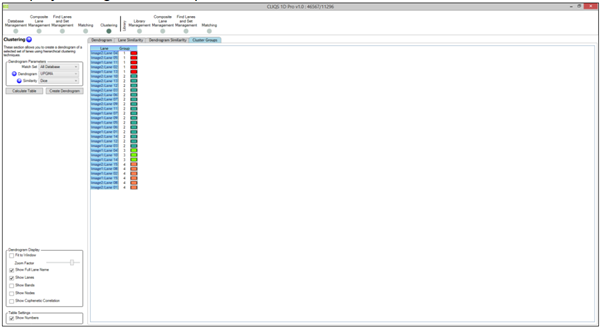
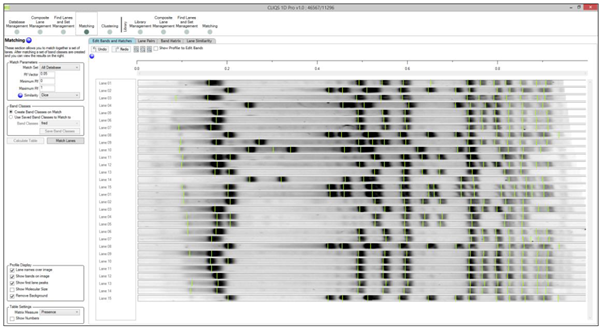
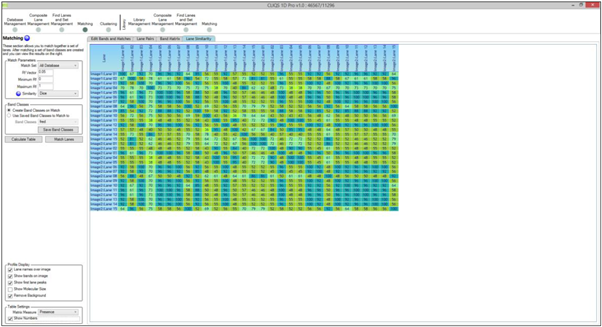
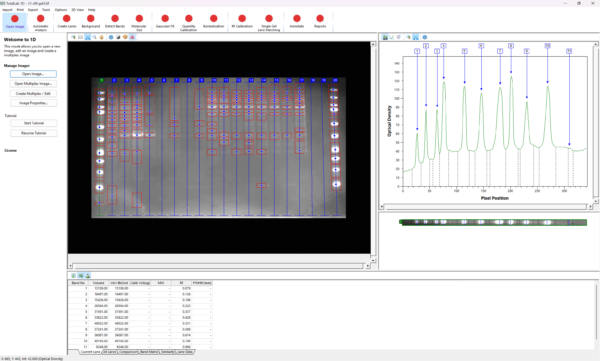
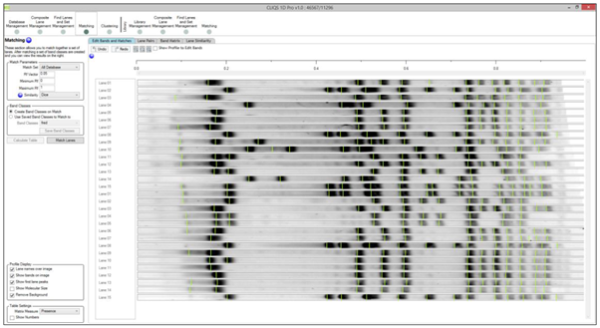
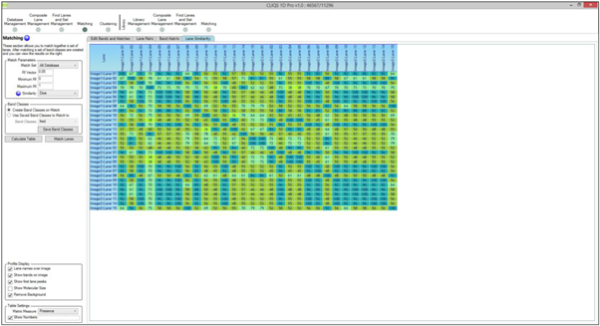
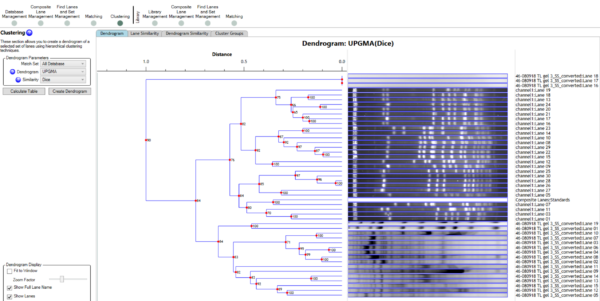
 CLIQS 1D Pro1D gel band matching and dendrograms




 Powered by Bioz