
Kinetic Virus Infectivity Analysis Software | TiterKinetix

Kinetic Virus Infectivity Analysis. Automated.
TiterKinetix replaces slow, imprecise endpoint infectivity assays with automated kinetic image analysis. Determine infectious virus titers in 24 hours instead of the average 5-10 days, with higher precision and 10x the throughput. 21 CFR Part 11 and GMP-compliant.
- 24h – Time to results (vs. 72h+)
- <20% CV – From just 3 wells per sample
- ~400 – Samples per operator per week
- 10x – Throughput vs. TCID50 assay

Solving the Analytical Bottleneck in Virus-Based Therapeutics
Infectivity is the most important quality attribute for oncolytic viruses, viral vectors, and vaccine candidates – a lack of infectivity effectively means your virus is “dead” and your therapeutic will never reach its target site. Yet still traditional assays remain the slowest step in your development pipeline.
If you are searching for a TCID50 alternative, or a way to stop scoring cytopathic effect by eye at day 5, this is it: TiterKinetix reads the bright-field time-lapse images your plate imager already captures, fits the infection kinetics across all timepoints, and reports an infectious titer per sample in 24 hours with under 20% CV from three wells. The endpoint dilution plate, the 72-hour-plus wait and the manual CPE read go away.
How to report TiterKinetix in your methods: “Infectious virus titers were determined by kinetic infectivity assay from bright-field time-lapse images (Cytation 5 / Incucyte) analyzed in TiterKinetix (TotalLab Ltd, Newcastle upon Tyne, UK), using three replicate wells per sample.”
Traditional TCID50 takes too long. Endpoint dilution assays typically require days of incubation before a single readout, followed by manual microscopic evaluation of cytopathic effects. For process development and formulation studies with hundreds of samples, this creates a crippling bottleneck.
High variability, low confidence. Manual CPE scoring is subjective and operator-dependent. Single-determination TCID50 assays routinely exhibit coefficients of variation (CV) of 44% or more, with variability of ±0.5 log₁₀ considered normal. Averaging across multiple plates improves precision but multiplies cost and time and limiting sample throughput.
Limited sample throughput. Each sample in a TCID50 assay requires an entire serial dilution across multiple replicate wells, consuming a full 96-well plate for just one sample. For studies generating hundreds of samples, this demands dozens of plates, multiple operators, and weeks of lab time to compensate for low precision by increasing your number of replicates, in turn making this bottleneck even more disruptive.
TiterKinetix offers a better way. TiterKinetix automates the analysis of kinetically acquired images (bright-field, fluorescence, phase contast, chemilumenescence.), tracking infection-induced cell changes over time. By fitting kinetic curves across all timepoints rather than relying on a single endpoint measurement, TiterKinetix delivers precise, reproducible infectious titers from after only a single replication cycle of a virus (not several as for TCID or Plaque assay)
How TiterKinetix Works
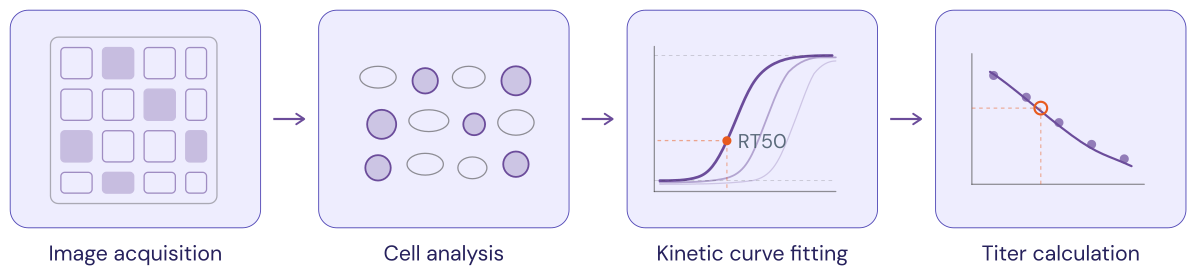
The software integrates with your existing plate-reading microscope workflow. No specialist reagents. No additional staining. Just label-free bright-field imaging and intelligent analysis.
Step 1: Image Acquisition Your existing plate reader (e.g. Agilent Cytation 5, Sartorius IncuCyte or many more) acquires bright-field images of each well at regular intervals over your desired capture timeframe.
Step 2: Automated Cell Analysis TiterKinetix automatically identifies and classifies cells in each image, calculating the proportion of changed cells per well at every timepoint.
Step 3: Kinetic Curve Fitting Kinetic fit curves (configurable by the user) are fitted to the time-course data, and the number of changed cells are extracted for each well.
Step 4: Titer Calculation Sample changed cell values are interpolated against the reference standard curve to determine infectious virus titers, with full QC metrics and reporting.
Key Features
- 24-Hour Results Replace 72-hour (or longer) endpoint assays with kinetic analysis that captures infection dynamics within 24 hours post-infection. Earlier readout means faster decision-making for process and formulation development.
- CV <20% from 3 Wells Kinetic curve fitting across all timepoints delivers precise results from just three replicate wells per sample, compared to the 44%+ CV typical of single-determination TCID50 assays that require an entire plate per sample.
- 21 CFR Part 11 / GMP Ready Full audit trail, electronic signatures, user access control, and data integrity features via TotalLab’s proven AuditSafe compliance framework. Designed for use in regulated pharma manufacturing and QC environments.
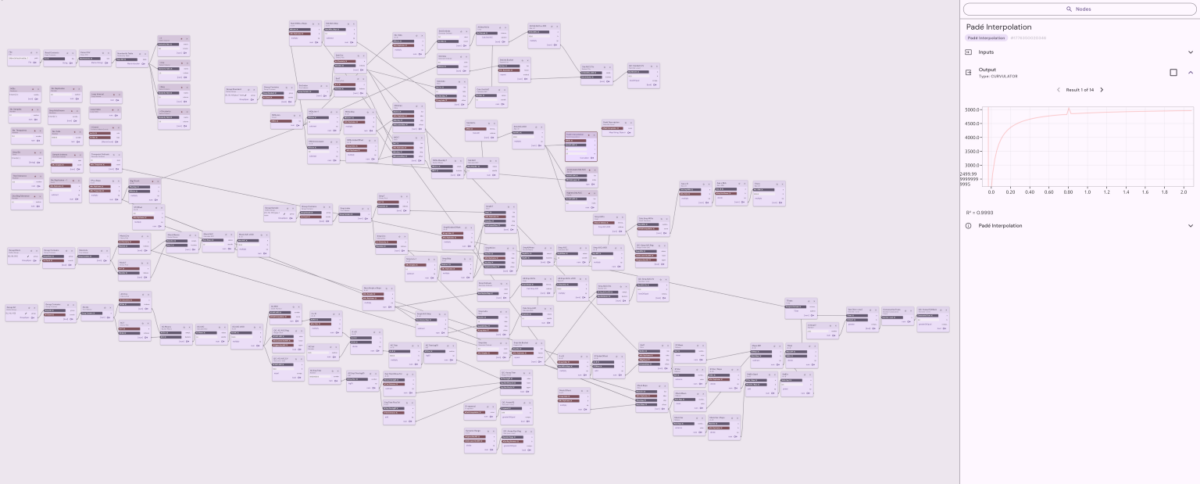
- Fully Automated Analysis From raw plate reader images to final titer report with no manual intervention. Automated cell detection, rounding classification, curve fitting, standard curve generation, and titer interpolation.
- Multiple Virus Types Applicable to any virus-cell combination that induces measurable morphological changes upon infection, including oncolytic viruses (VSV, NDV), parapoxviruses (ORFV), and potentially adenoviruses, HSV, and other CPE-inducing vectors.
- Multiple samples per plate Single-dose infection per sample maximizes plate utilization. Process multiple replicate samples on one 96-well plate, or scale to 384-well format for even higher throughput with minimal protocol changes.
TiterKinetix vs. Traditional Infectivity Assays
A direct comparison for measuring 24 samples:
| Parameter | Manual TCID50 | Semi-Automated TCID50 | TiterKinetix (KIT Assay) |
|---|---|---|---|
| Assay duration after infection | 72 hours | 72 hours | 24 hours |
| Hands-on time (24 samples) | 12 hours | 3.3 hours | 1.2 hours |
| Variability (CV) | Significant | Significant | Greatly reduced through automation |
| 96-well plates required | 24 | 24 | 1 |
| Wells per sample | ~96 (full serial dilution) | ~96 (full serial dilution) | 3 (triplicate single dose) |
| Readout method | Manual microscopy | Automated CPE scoring | Kinetic cell morphology changes |
| Staining required | Optional | Optional | Optional |
| Stability-indicating | Yes | Yes | Yes |
| 21 CFR / GMP compliant | No | Varies | Yes |
TCID50 variability refers to a single determination. Precision can be improved by averaging multiple determinations, but this multiplies time and plate usage proportionally.
See TiterKinetix in Action
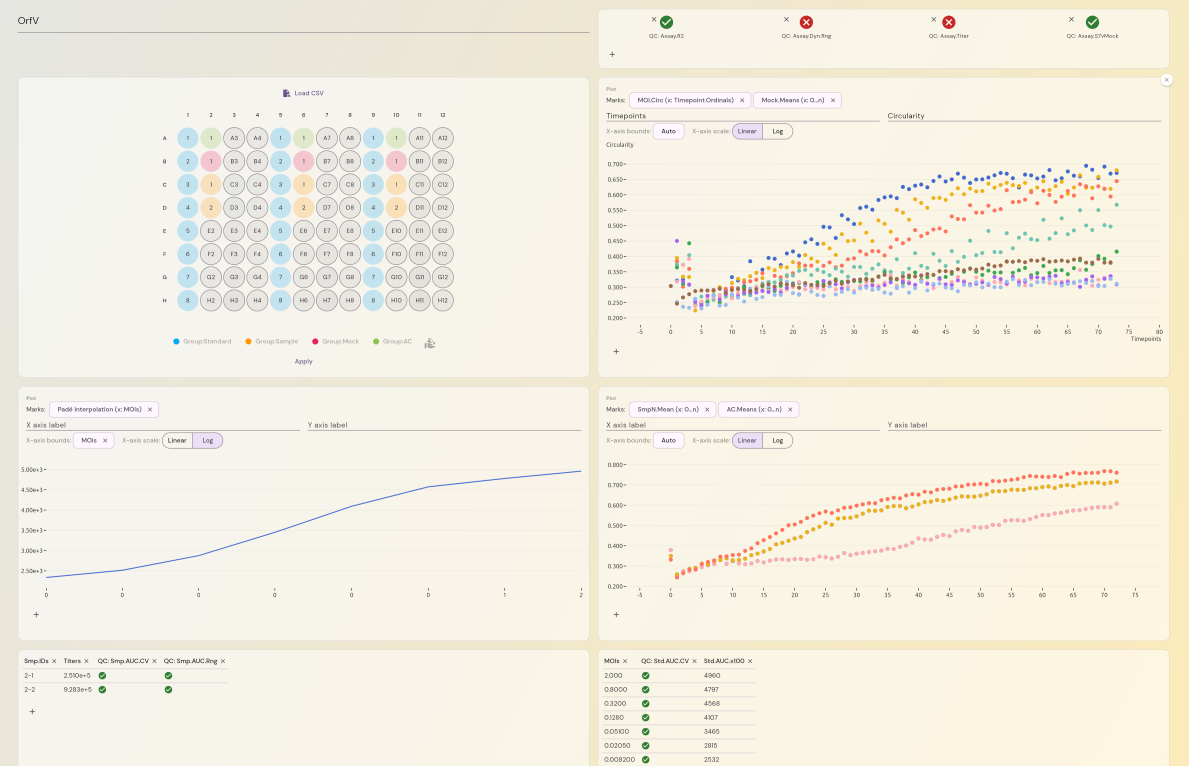
An intuitive interface designed for scientists, not software engineers.
Applications
TiterKinetix addresses the analytical needs of any organization developing or manufacturing virus-based therapeutics.
- Process Development Screen hundreds of upstream and downstream process conditions with rapid titer feedback, enabling data-driven optimization of viral vector production.
- Formulation Studies Evaluate excipient compatibility, storage conditions, and lyophilization protocols with high-precision infectivity measurements at scale.
- Release and Stability Testing Stability-indicating kinetic readout detects subtle titer losses from thermal stress, UV, or other degradation pathways. Ideal for lot release and long-term stability programmes.
- GMP Quality Control 21 CFR Part 11-compliant analysis with full audit trail, electronic signatures, and user access controls for regulated manufacturing environments.
- Method Transfer Instrument and software-independent readout principle means TiterKinetix can be aligned across multiple sites with different pre-existing lab configurations.
- Academic Research Characterize viral growth kinetics, screen antiviral compounds, or evaluate recombinant virus variants with a faster, more quantitative infectivity readout.
Built on Published Science
TiterKinetix implements the kinetic infectious virus titer (KIT) assay methodology, a peer-reviewed approach to infectivity measurement.
The kinetic infectivity assay principle has been developed and validated at a leading global pharmaceutical company’s Viral Therapeutics Center by scientists specializing in analytical development for virus-based advanced therapeutic medicinal products (ATMPs). The technique has been demonstrated across multiple virus-cell combinations and published in the International Journal of Molecular Sciences (2024).
The core insight is that infection-induced cell rounding, a common early morphological response to viral infection, progresses in a time- and dose-dependent manner that directly reflects the quantity of infectious virus applied. By tracking this progression kinetically rather than waiting for a final endpoint, the assay captures richer data per well, delivering higher precision from fewer replicates.
“The kinetic infectious virus titer (KIT) assay is stability-indicating and, due to its sensitive readout method, provides results within 24 hours post-infection. Compared to traditional infectivity assays, cumulated analysis of kinetic data by a fit model results in precise results (CV < 20%) based on only three wells per sample.”
– Hotter, D., Kunzelmann, M., et al. (2024). Int. J. Mol. Sci., 25, 8076. doi:10.3390/ijms25158076
TotalLab’s TiterKinetix software automates every step of this analysis: from importing raw plate reader images and performing automated cell morphology classification, through kinetic curve fitting and standard curve generation, to final titer calculation and compliant reporting.
Who Is TiterKinetix For?
If your organization develops, manufactures, or studies virus-based therapeutics and needs faster, more precise infectivity data, TiterKinetix can help.
The growing pipeline of virus-based ATMPs, including oncolytic viruses, viral vector gene therapies (AAV, lentiviral, adenoviral), and next-generation viral vaccines, is placing unprecedented demand on infectivity analytics. Traditional assays cannot keep pace with the sample volumes generated by modern process development, formulation screening, and stability programmes.
TiterKinetix is designed for analytical development scientists, QC analysts, and bioprocess engineers at pharmaceutical and biotechnology companies who need to measure infectious virus titers routinely, precisely, and in compliance with regulatory requirements. It is equally valuable for academic virology groups seeking a more quantitative and reproducible approach to infectivity measurement.
The software has been developed in collaboration with pharmaceutical industry scientists working at the forefront of viral therapeutics development, and reflects the real-world requirements of high-throughput, GMP-grade analytical workflows.
Compatibility and Requirements
TiterKinetix works with your existing laboratory infrastructure.
Plate Readers: TiterKinetix is compatible with almost all automated plate-reading devices capable of time-lapse bright-field imaging in 96- or 384-well format. We have also optimized the software for use in custom projects using the Agilent/BioTek Cytation 5 multimode imaging reader with BioSpa automated incubator and the Sartorius Incucyte family of imaging devices if your lab is using either of those devices.
Contact us if you’d like to discuss your specific instrument configuration.
Compliance: Full 21 CFR Part 11 and GMP compliance via TotalLab’s AuditSafe framework, including audit trail, electronic signatures, user role management, and data integrity controls. Validated for use in regulated pharmaceutical development and manufacturing environments.
Ready to Accelerate Your Infectivity Analytics?
See how TiterKinetix can transform your virus titer workflow. Request a personalized demonstration or speak to our team about your specific requirements.
TiterKinetix FAQs
What is TiterKinetix used for?
TiterKinetix is software for kinetic virus infectivity analysis, supporting titer determination workflows in virology and bioprocessing labs.
How does TiterKinetix differ from endpoint titer methods?
TiterKinetix analyzes infectivity kinetically over time rather than at a single endpoint, giving richer information from virus infectivity assays.
Can I see a demo of TiterKinetix?
Yes. You can request a TiterKinetix demo through the TotalLab website using the demo button on this page.
Resources
Free TCID50 calculator: Spearman-Kärber and Reed-Muench
Enter the number of infected wells at each dilution and get your titer in TCID50/mL by both methods, with a 95% confidence interval and an estimated PFU/mL. It runs in your browser, and nothing you enter is sent to TotalLab. Useful when you are comparing a kinetic titer against the endpoint dilution assay it replaces.