
Gel documentation software for the gel doc you already own

Your gel doc captures the image. What you need next is the number: band intensities normalized to a loading control, a colony count you can defend, spot values from a cytokine array. TotalLab makes the analysis software that turns gel doc images into those results, and it works with images from any gel doc system, whoever built it.
The gel doc is the imager most of our users pair with our software, and it images far more than gels. Colonies on agar plates, dot blots and arrays, tissue sections, live animal images: we have dedicated software for each.
If you build gel documentation systems rather than use them, we also write the software that ships with them. We built AzureSpot Pro, Azure Biosystems’ own branded analysis software, on our technology.
Talk to the people who build the software. Everything under NDA.
Match your experiment to the right software
Each TotalLab product is built around one kind of experiment, so the detection, background subtraction and reporting fit the way that experiment is analyzed. Pick the row that matches what you are imaging on your gel doc. Every product has a free trial.
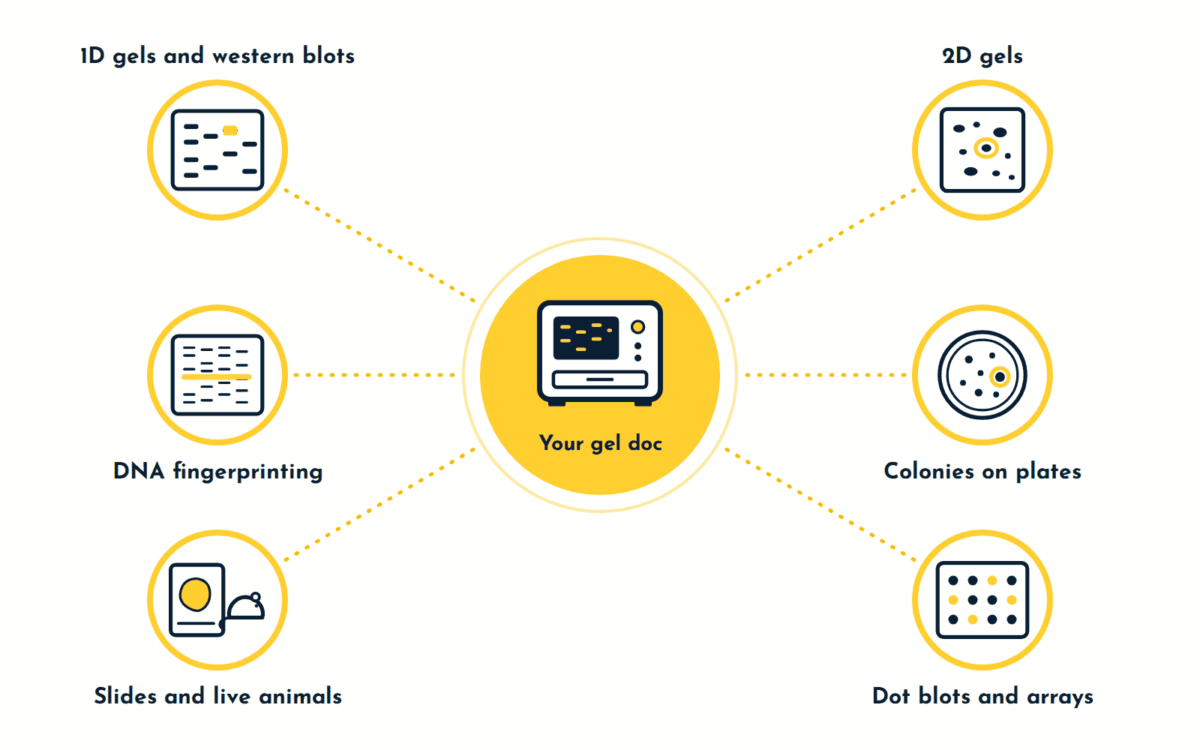
| What you image on your gel doc | Typical measurements | TotalLab software | Free trial |
|---|---|---|---|
| 1D gels (SDS-PAGE, agarose) and western blots | Lane and band detection, densitometry, background subtraction, molecular weight, normalization to a loading control or total protein | Phoretix 1D | Try Phoretix 1D free |
| DNA fingerprinting gels (PFGE, RFLP, RAPD, DGGE and more) | Band matching and similarity across gels, searchable gel image database | CLIQS 1D Pro | Try CLIQS 1D Pro free |
| 2D gels, 2D-DIGE and 2D western blots | Spot detection with 100% spot matching across the experiment, differential expression statistics | SameSpots | Try SameSpots free |
| Bacterial colonies on agar plates, inhibition zones, multiwell plates | Colony counts (CFU), inhibition zone diameters, cell and particle counts | Phoretix Colony Counter | Try Phoretix Colony Counter free |
| Dot blots, cytokine and antibody arrays, microarrays, slot blots, 96 and 384-well plates | Grid-based spot quantification, background subtraction, normalization to control spots, presence and absence calls | Phoretix Array | Try Phoretix Array free |
| Tissue sections, histology slides, live animal images, autoradiography, TLC plates, lateral flow tests | Area measurements, profiles and quantification with any tool in any order | Phoretix Toolbox | Try Phoretix Toolbox free |
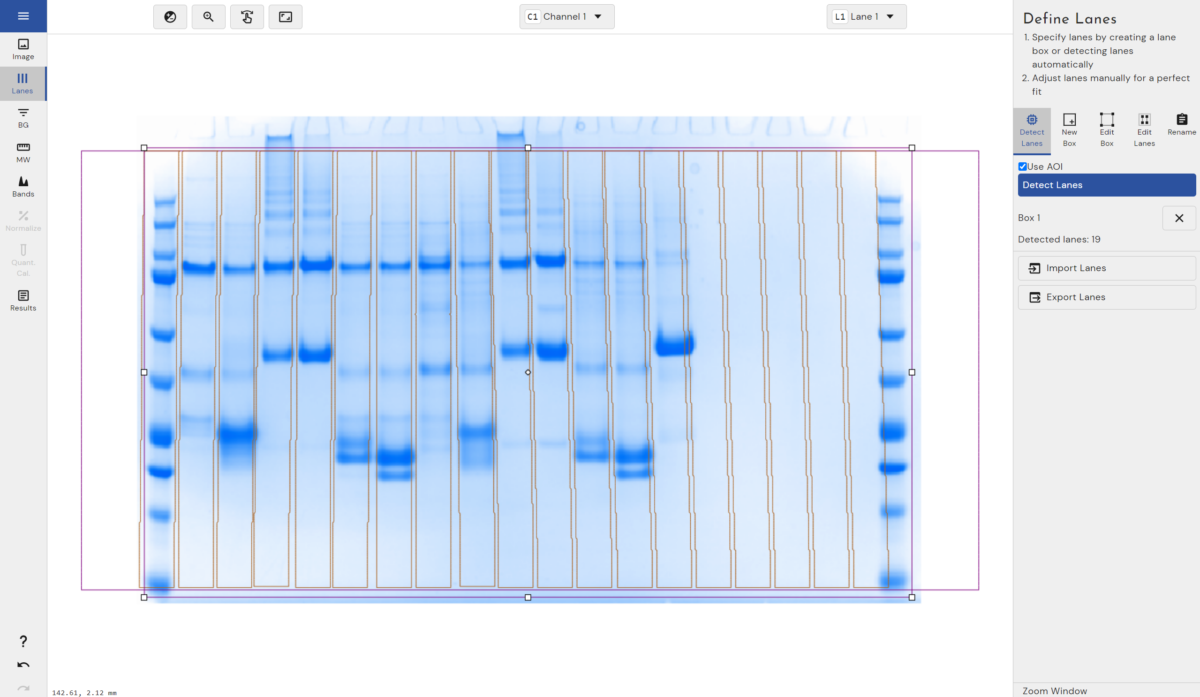
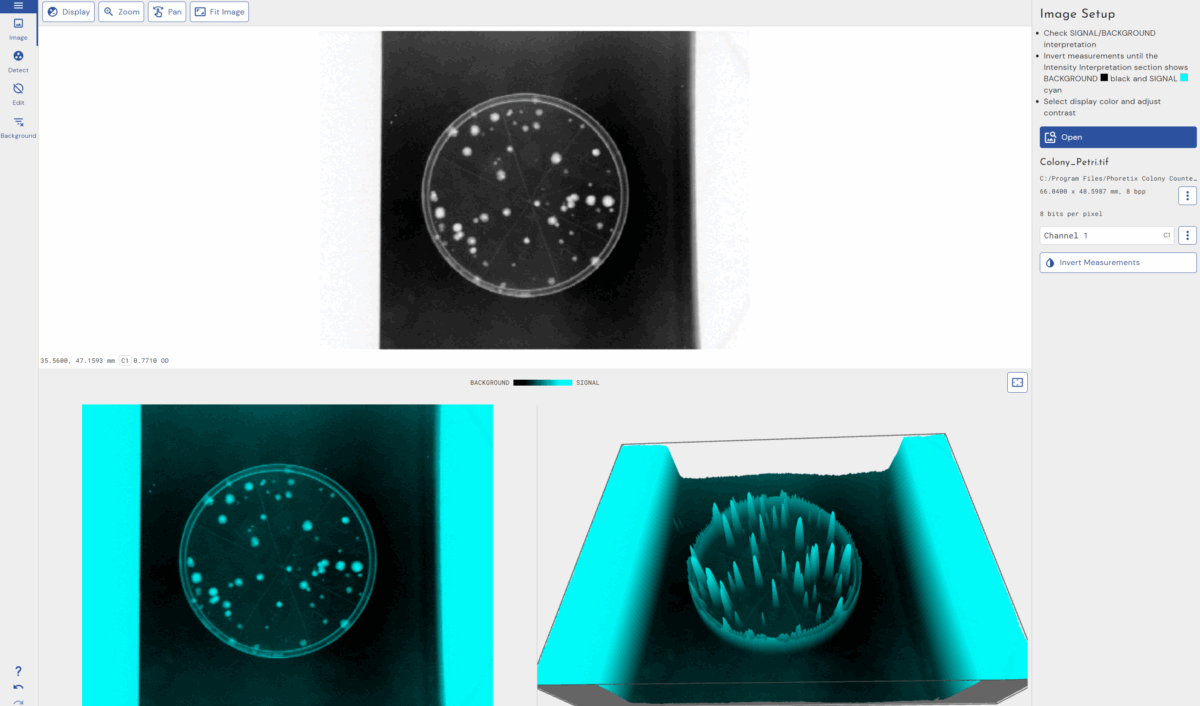
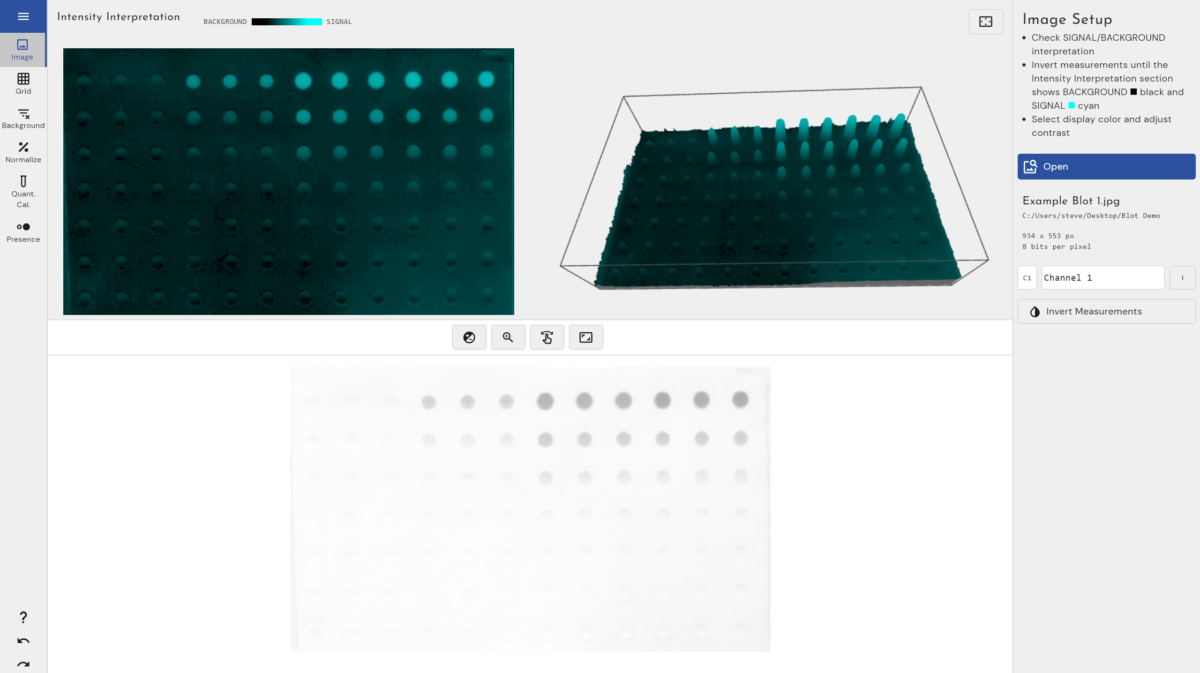
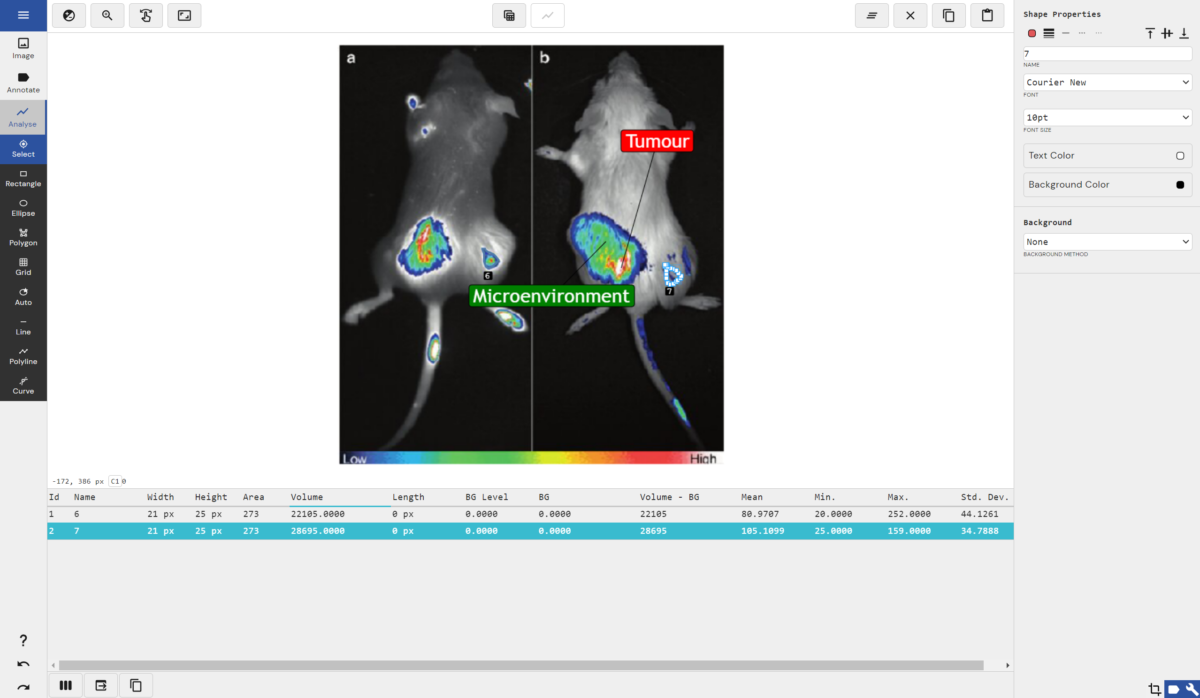
The same gel doc, four TotalLab products.
Works with images from any gel doc
Our software is device agnostic. It analyzes images from gel documentation systems made by Bio-Rad, Azure Biosystems, Thermo Fisher Scientific, Syngene, Vilber and Pop-Bio, among others, and from scanners and cameras. If your lab runs two brands of imager, or inherits a third through an acquisition, one analysis package covers all of them.
Export 16-bit uncompressed TIFF from your gel doc if it offers it. Phoretix 1D, Phoretix Colony Counter, Phoretix Array and Phoretix Toolbox read 8-bit, 16-bit and higher TIFF, and treat each page of a multi-page TIFF as a separate channel. Phoretix 1D also keeps the TIFF metadata (pixel density, calibration and scanner settings). JPEG, PNG, BMP and IMG files open too, though their lower bit depth and compression limit accuracy, so use them only when TIFF is not available.
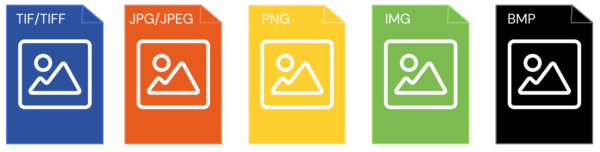
Phoretix 1D, Phoretix Colony Counter, Phoretix Array and Phoretix Toolbox run on Windows, macOS (Intel and Apple M-series), Linux and ARM-based PCs. SameSpots and SpotMap 2D are Windows only.
| TotalLab software | Runs on | Opens these image files |
|---|---|---|
| Phoretix 1D | Windows, macOS (Intel and Apple M-series), Linux and ARM-based PCs | TIFF (8-bit, 16-bit and higher, multi-page), JPEG, PNG, BMP, IMG |
| CLIQS 1D Pro | Windows | TIFF, JPEG, PNG, GIF, GEL, IMG (Fuji), BMP |
| SameSpots | Windows 10 and 11 (64-bit) | TIFF, JPG, PNG, BMP and other industry-standard formats |
| Phoretix Colony Counter | Windows, macOS (Intel and Apple M-series), Linux and ARM-based PCs | TIFF (8-bit, 16-bit and higher, multi-page), JPEG, PNG, BMP, IMG |
| Phoretix Array | Windows, macOS (including Apple M-series) and Linux | TIFF, JPEG, PNG, BMP, IMG |
| Phoretix Toolbox | Windows, macOS (Intel and Apple M-series), Linux and ARM-based PCs | TIFF (8-bit, 16-bit and higher, multi-page), GEL, JPEG, PNG, BMP, IMG |
Operating systems and image files supported by each TotalLab product.
Why independent analysis software
Most gel docs ship with capture software, and many include basic analysis. That is often enough to take a picture and draw a box around a band. Labs move to dedicated analysis software when the result has to hold up.
One method across every instrument. The same detection and background settings give the same answer whichever imager took the picture, so results from different users, labs and devices stay comparable.
Automation that removes operator variability. Automatic lane and band detection in Phoretix 1D, and automatic colony detection in Phoretix Colony Counter, give results in less than a minute per image. In Phoretix Colony Counter every count can be checked and edited by eye before it goes in the report, so the software is never a black box.
No lock-in. Because the software is not tied to one manufacturer, you can replace or add imagers without retraining staff or revalidating a new analysis method.
Support from scientists. Our team is a mix of PhD life scientists, mathematicians and software developers with more than 30 years of experience in life science image analysis.
21 CFR Part 11 for regulated labs
QC and GMP labs cannot use analysis software that leaves no record of who changed what. With AuditSafe, TotalLab software provides audit trails, electronic signatures, granular user permissions and image authenticity verification for FDA 21 CFR Part 11 and EU Annex 11, from the captured image through to the final report.

For gel doc manufacturers: OEM analysis software
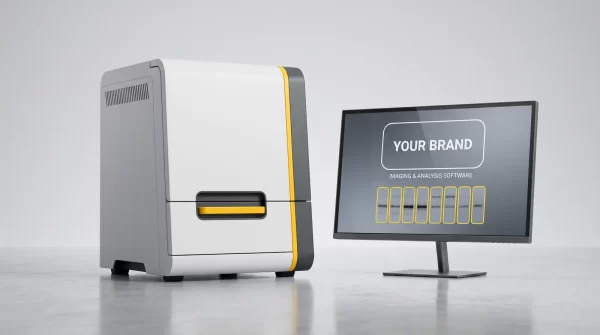
A gel doc that produces a picture is a camera. One that produces quantified bands, colony counts and a signed report is a product a lab can buy with confidence. The analysis layer is the part of your instrument your customers touch every day, and if you do not supply it, a competitor or a third party will.
That is why imaging manufacturers come to us. Building image analysis in-house means recruiting a specialist team and spending years on detection and quantification algorithms that are far harder to get right than they look. We have spent more than two decades on exactly that, and our analysis technology already covers the applications gel docs are used for: 1D gels
and western blots, multiplex and in-cell westerns, colony counting, dot blots and arrays, and live animal imaging.
Proof: AzureSpot Pro. Azure Biosystems started by distributing our established analysis software with their instruments. Once the demand was proven, we built AzureSpot Pro, an Azure-branded analysis product on our technology, shaped around their imagers and their customers’ workflows. We then delivered a 21 CFR Part 11 and GMP-compliant edition, with IQ and
OQ, which opened the regulated pharmaceutical market to them.
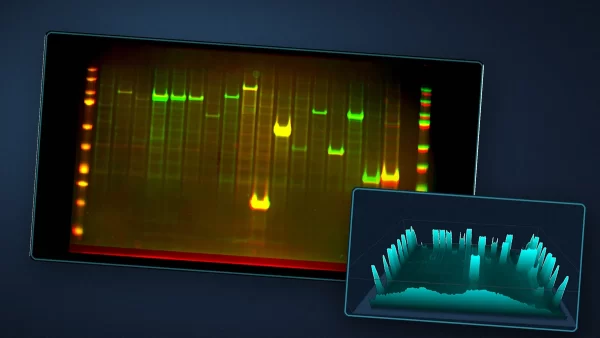
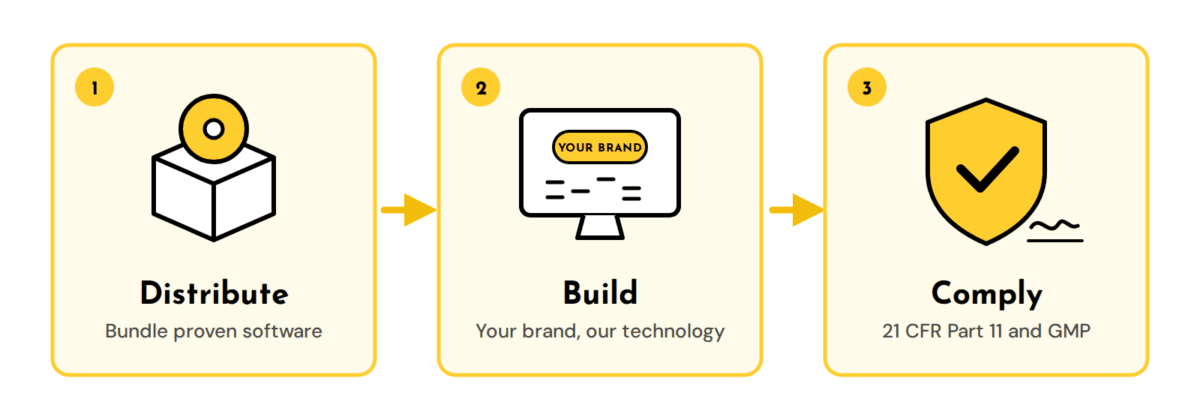
Three ways to work with us:
Distribute. Bundle our established analysis software with your gel doc. The fastest route to a complete offering, with no development spend, and a real test of what your customers use.
Build. A white-label or co-branded analysis product on our technology, carrying your name. You own the customer relationship and the upgrade path; we handle development, testing and support.
Comply. Add 21 CFR Part 11, Annex 11 and GMP compliance to software you already ship, using AuditSafe, without redesigning your product.
The software carries your brand, the work is covered by an NDA.
OEM instrument software explained: white-label, co-branded and licensed models
Analyze your next gel doc image, or put our software inside your next gel doc
Frequently asked questions
What is gel documentation software?
The term covers two kinds of software. Capture software runs the gel doc itself: exposure, illumination and saving the image. Analysis software turns that image into results, such as band intensities, molecular weights, colony counts or spot values. TotalLab makes analysis software, and it works with images from any gel doc.
Will your software work with my gel doc?
Yes, if your gel doc can save an image file. Our software is device agnostic and analyzes images from gel docs made by Bio-Rad, Azure Biosystems, Thermo Fisher Scientific, Syngene, Vilber, Pop-Bio and others.
What file format should I export from my gel doc?
Uncompressed 16-bit TIFF. The software also reads 8-bit and higher-bit TIFF, multi-page TIFF (each page is a channel), JPEG, PNG, BMP and IMG, but compressed and low bit-depth formats reduce the accuracy of quantification.
Can one gel doc and TotalLab software analyze gels, colonies and arrays?
Yes. Use Phoretix 1D for gels and western blots, Phoretix Colony Counter for colonies on agar plates, Phoretix Array for dot blots and arrays, and Phoretix Toolbox for tissue sections, live animal images and other image types. All of them read images from the same gel doc.
Is the software compliant with 21 CFR Part 11?
With AuditSafe, TotalLab software provides audit trails, electronic signatures, granular user permissions and image authenticity verification for FDA 21 CFR Part 11 and EU Annex 11.
We manufacture gel documentation systems. Can you build our analysis software?
Yes. We build white-label and co-branded analysis software for imaging manufacturers, including AzureSpot Pro for Azure Biosystems. Many partnerships start by bundling our existing software with your instrument, then move to a branded product once the demand is proven.